
Every growing business eventually faces a version of the same decision. The current office space is not working it is too small, configured for a business that no longer exists, in a location that no longer serves the team, or simply worn down to the point where it reflects nothing of what the company has become. The question that follows is the one that affects budget, timeline, operations, and the long-term real estate position of the business: do you renovate what you have or build something new?
It sounds like a straightforward comparison. Renovation is faster and cheaper. New construction gives you exactly what you want. Neither of those generalizations holds up consistently in practice, and businesses that make the decision based on them rather than on the specific conditions of their situation end up in projects that underperform the expectations those generalizations created.
The right answer depends on factors that are specific to the existing space, the business’s operational requirements, the local real estate market, the available budget, and the timeline the business is working within. An office renovation contractor who gives you an honest assessment of what the existing space can and cannot become is as valuable as an office construction contractor who gives you an honest assessment of what new construction will cost and take. This guide covers the full comparison what renovation and new construction each actually involve, where each option outperforms the other, and what the decision framework looks like when it is applied to the specific conditions of a real business situation.
What Office Renovation Actually Involves
Office renovation is not interior decorating at a larger scale. A meaningful office renovation the kind that transforms how a space functions and how it reflects the business involves construction work that can be as complex and as disruptive as new construction in specific areas while delivering results that are constrained in other areas by the existing conditions of the building.
The Scope Range of Office Renovation
Office renovation spans a wide range of scope and complexity. At the lighter end, cosmetic renovation new paint, new flooring, new lighting fixtures, updated furniture and finishes changes the appearance of the space without touching the walls, the mechanical systems, or the structural elements. Cosmetic renovation is fast, relatively inexpensive, and appropriate when the fundamental layout and systems of the space are adequate and only the appearance needs updating.
At the more demanding end, full office renovation involves reconfiguring the layout moving or removing walls, changing the relationship between spaces, creating new conference rooms or collaboration areas where they did not exist, and opening up floor plates that were divided into private offices that no longer reflect how the business works. This scope involves structural work where walls that are removed are load-bearing, mechanical and electrical work to serve the reconfigured spaces, new ceilings and flooring throughout, and in many cases bringing the building systems up to current code standards that were not required of the original construction.
An office renovation contractor who assesses the existing space thoroughly before scoping the renovation identifies which elements of the renovation are straightforward and which are complicated by existing conditions the mechanical systems that need to be rerouted around structural elements that cannot be moved, the electrical capacity that needs to be upgraded before the load of the renovated space can be supported, the existing asbestos or lead paint that adds cost and timeline to work in specific building areas.
What Existing Conditions Determine
The most significant variable in an office renovation is what the existing building contributes and what it constrains. A well-built building with current mechanical and electrical systems, good bones, an adaptable structural system, and ceiling heights that work for the planned use is a renovation candidate that can be transformed efficiently. A building with outdated mechanical systems that do not support modern office density, structural systems that limit where walls can be removed, ceiling heights that cannot accommodate the open ceiling aesthetic that the business wants, or significant deferred maintenance that must be addressed before renovation proceeds is a building where the renovation cost approaches new construction cost for a result that is still constrained by the existing structure.
The only way to know which category an existing building falls into is thorough assessment before the renovation decision is made. An office renovation contractor who conducts that assessment honestly including bringing in structural engineers, mechanical engineers, and environmental consultants where the conditions warrant is the starting point for a renovation decision that is based on reality rather than optimistic assumptions about what the existing building can become.
What New Office Construction Actually Involves
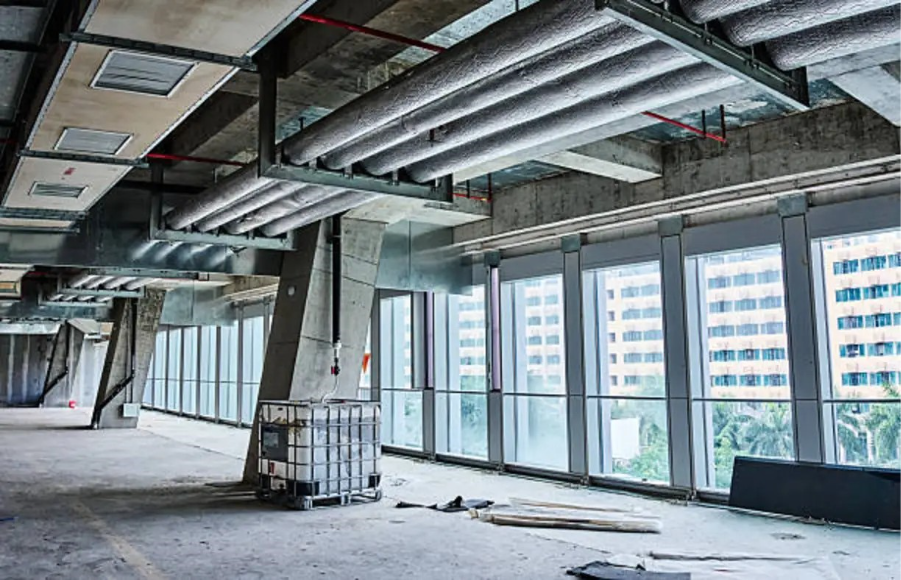
New construction building a ground-up office building or fit-out of a core and shell space in a new building starts with a blank slate that removes the constraints of existing conditions at the cost of the time and investment required to create from nothing what renovation leverages from what already exists.
Ground-Up Construction
Ground-up office construction involves acquiring or controlling a site, engaging an architect and engineer to design the building, obtaining permits and approvals, and constructing the building from foundation through final finishes. It is the most expensive and most time-consuming path to a new office but the one that produces the most complete alignment between the finished building and the business’s requirements because every decision orientation, structural system, mechanical system, layout, facade is made to serve the specific use rather than adapted from decisions made for a prior use.
Ground-up construction timelines for commercial office buildings typically run 18 to 36 months from design initiation through occupancy depending on project size, complexity, and local permitting conditions. For a business that needs to be in a new space in six months, ground-up construction is not a viable option regardless of its long-term advantages.
Tenant Improvement in New Construction
For businesses leasing space in a newly constructed commercial building, tenant improvement the fit-out of the shell space to the tenant’s specific requirements represents a middle path between full new construction and renovation of existing space. The building structure, facade, mechanical systems backbone, and vertical transportation are already in place. The tenant fit out customizes the interior for the specific business with the freedom of an unbuilt interior but without the cost and time of constructing the building itself.
Tenant improvement in new construction is often negotiated as part of the lease the landlord provides a tenant improvement allowance that the tenant applies toward the fit-out cost. The fit-out is designed and built by office construction contractors working to the tenant’s program within the constraints of the base building, which are significantly less constraining than the existing conditions of an occupied older building.
The Cost Comparison: What the Numbers Actually Look Like
Cost is the factor that most business owners lead with in the renovation versus new construction comparison, and the comparison is less straightforward than the intuition that renovation is cheaper usually suggests.
Renovation Cost Variables
Office renovation cost varies more widely than new construction cost because of the variability of existing conditions. A cosmetic renovation of a well-maintained space might cost $30 to $60 per square foot. A full renovation that reconfigures the layout, updates mechanical and electrical systems, and addresses deferred maintenance in an older building can run $150 to $300 per square foot or more approaching or exceeding the cost of tenant improvement in new construction.
The budget variable that most consistently causes renovation cost surprises is what demolition reveals. Opening walls, ceilings, and floors in an existing office building routinely exposes conditions that were not visible in the pre-construction assessment mechanical systems that are in worse condition than exterior inspection suggested, structural elements that complicate the planned layout changes, environmental issues that require remediation before renovation proceeds. An office renovation contractor who builds a meaningful contingency into the renovation budget 15 to 20 percent for older buildings where existing conditions are less predictable is accounting for the reality of renovation projects rather than producing a number that looks competitive before construction and grows significantly during it.
New Construction Cost Clarity
New construction whether ground-up or tenant improvement offers more cost predictability than renovation of existing space because the scope is defined by what will be built rather than modified by what already exists. Tenant improvement costs in new construction typically run $100 to $200 per square foot for a quality office fit-out depending on the finish level, the density of private offices versus open plan, and the technology infrastructure requirements of the specific business.
Ground-up office construction costs including the building structure, facade, and core systems in addition to the interior fit-out run $300 to $600 per square foot or more in most markets depending on local construction costs, the complexity of the building, and the finish level of the interior.
The Total Cost of Ownership Comparison
The comparison of upfront construction cost is an incomplete picture of the financial decision between renovation and new construction. The total cost of ownership includes the efficiency of the finished space how well the space serves the business’s operational needs, which affects productivity the energy performance of the building systems, the maintenance requirements of the finished space, and the real estate position the decision creates.
A renovated space in an owned building that was purchased at a favorable price may represent significantly better total cost of ownership than new construction in a leased space even if the renovation cost per square foot is higher than the tenant improvement allowance in the new building. A new building with modern mechanical systems and building envelope performance may produce lower annual operating costs than a renovated older building with upgraded but still less efficient systems. The financial comparison that informs the decision includes all of these factors rather than the construction cost alone.
Timeline: The Factor That Often Decides
For many businesses, the timeline comparison between renovation and new construction is the deciding factor because the business’s operational situation a lease expiration, a growth trajectory that has already outgrown the current space, a client relationship that requires a better office environment creates a deadline that one option can meet and the other cannot.
Renovation Timeline
Cosmetic office renovation can be completed in weeks to a couple of months depending on scope. A full renovation that reconfigures layout and updates systems runs three to nine months depending on the complexity of the scope and the conditions of the existing building. Renovation projects in occupied spaces where the business needs to continue operating during construction require phased approaches that extend the timeline relative to a complete gut renovation of a vacated space but that eliminate the need to find temporary accommodation for the displaced operations.
An office renovation contractor who manages occupied space renovation effective sequencing the work to minimize disruption to the operating business, scheduling noisy and disruptive work during off-hours, maintaining clear separation between the construction zone and the occupied areas makes renovation of an occupied space viable when the business cannot afford the disruption of relocation during construction.
New Construction Timeline
Ground-up new office construction timelines of 18 to 36 months are not compatible with business timelines that require a solution in the near term. Tenant improvement in new construction, where the building is already under construction when the lease is signed, can sometimes deliver an occupied space in six to nine months from lease execution if the building construction timeline and the tenant improvement design and permitting timeline can be run in parallel.
For businesses with near-term space needs, renovation is typically the only option that can meet the timeline. For businesses with the runway to plan 18 to 24 months ahead, new construction becomes a viable option that renovation cannot match in terms of the completeness of alignment with the business’s requirements.
Operational Disruption: The Cost Nobody Fully Accounts For
The operational disruption of either option the cost to the business of the construction process itself rather than the cost of the construction is one of the most significant and most consistently underestimated factors in the renovation versus new construction comparison.
Renovation Disruption
Office renovation of an occupied space disrupts the people working in it. Noise, dust, reduced access to areas under construction, relocated workstations, and the general unsettledness of working in a construction zone all affect productivity, morale, and the impression the office makes on clients and candidates who visit during construction. In professional service businesses where the office environment affects client confidence, the period of renovation disruption has costs that do not appear in the construction budget.
Managing renovation disruption requires deliberate planning phasing that keeps the occupied areas functional, communication that keeps the team informed about what is happening and when it will affect their work, and scheduling that concentrates the most disruptive work during periods when its impact is least. An office renovation contractor who has managed occupied space renovation extensively brings the project management approach that makes renovation disruption manageable rather than chaotic.
Relocation During New Construction
Ground-up new construction requires the business to be somewhere else for the duration of the project 18 to 36 months of rent or lease cost for temporary space, two office moves instead of one, and the operational disruption of establishing and then abandoning a temporary office environment. The cost of temporary space and two moves is a significant addition to the financial comparison between renovation and new construction that the construction cost alone does not capture.
Tenant improvement in new construction sometimes allows the business to remain in its current space until the new space is ready, eliminating the temporary space cost if the timing works the current lease expires approximately when the new space is ready for occupancy. This alignment is worth pursuing in lease negotiations but requires the kind of planning lead time that most businesses do not build into their real estate decisions early enough.
When Renovation Is Clearly the Better Choice
Renovation outperforms new construction clearly in specific conditions that apply to many business real estate situations.
When the existing space has good bones adequate ceiling height, a structural system that allows the layout changes the business needs, mechanical systems that are in adequate condition or that can be upgraded efficiently renovation delivers the improved space the business needs at a fraction of the cost and time of new construction.
When the location of the existing space is valuable proximity to clients, access to talent, established business relationships in the neighborhood renovation preserves a location advantage that new construction in a different location would sacrifice. Location is one of the factors in commercial real estate that money can purchase in a new location but that established history in an existing location provides at the cost of the renovation rather than the cost of the real estate.
When the business owns the building, renovation is often financially superior to new construction because it improves an owned asset rather than paying for a new asset through lease payments. The renovation cost increases the value of an owned asset. The tenant improvement cost in a new leased building is an investment in a space the business does not own.
When the business timeline does not support the new construction duration, renovation is the option that meets the operational need regardless of the theoretical advantages of new construction.
When New Construction Is Clearly the Better Choice
New construction outperforms renovation clearly in conditions that apply to businesses whose existing space cannot be transformed to meet their needs regardless of renovation investment.
When the existing building’s structural system, ceiling height, floor plate configuration, or mechanical system fundamentally cannot support the space the business needs when the constraints of the existing building are not addressable through renovation at any reasonable cost new construction is the only path to the space the business requires.
When the existing location no longer serves the business when the talent market has shifted, when clients are concentrated in a different area, when the neighborhood no longer aligns with the brand the business presents a new location through new construction or a new lease serves the business better than renovation that improves the wrong location.
When the business is growing rapidly enough that the renovated existing space will be inadequate within a few years of completion, new construction that is sized for the growth trajectory is a better long-term investment than renovation that solves the near-term problem and creates the same problem again in a few years.
When the business is committed to a specific building performance standard LEED certification, net-zero energy performance, specific technology infrastructure that the existing building cannot achieve through renovation at a cost that makes sense, new construction that achieves those standards from the beginning is the path to the building performance the business requires.
Why Build Once Construction Makes the Renovation vs New Construction Decision Easier
Making the renovation versus new construction decision with confidence requires honest assessments from experienced professionals who understand both paths who can evaluate what the existing space can and cannot become and what new construction will require in terms of cost, timeline, and process. Build Once Construction simplifies the entire process by giving you direct access to experienced office renovation contractor and office construction contractors professionals who have delivered both renovation and new construction projects and who approach the comparison with the honesty that a decision of this significance deserves.
Whether you need a thorough assessment of what your existing office space can become through renovation and what that renovation will realistically cost and take, a new construction project that is designed and built to the specific operational requirements of your business without the constraints that existing conditions impose, or honest guidance about which path actually serves your business’s specific situation your timeline, your budget, your location requirements, and your operational needs Build Once Construction works with business owners to make the renovation versus new construction decision on the basis of the full picture rather than the oversimplifications that lead to projects that underperform the expectations they were built on.
You get honest pre-project assessment of both options, transparent cost and timeline information that reflects the realistic requirements of each path rather than the numbers that make one option look more attractive than it is, and construction delivery from office construction contractors who manage the process with the competence and communication that a project affecting your business operations demands. For business owners who want the renovation versus new construction decision made correctly rather than made quickly, Build Once Construction is the starting point worth finding before committing to a path based on incomplete information.
Final Thought
The renovation versus new construction decision is not a question with a universal answer. It is a question whose answer depends on the specific conditions of the existing space, the specific requirements of the business, the specific timeline the business is working within, and the specific financial position that determines which investment makes sense over the relevant time horizon.
An office renovation contractor who gives you an honest assessment of what the existing space can and cannot become is doing the work that makes the decision well-informed. An office construction contractors’ team who gives you an honest assessment of what new construction will cost, and take is doing the same. The decision that follows those honest assessments whichever direction it leads is a decision that the project can be built on rather than a decision that the project will eventually reveal was made on optimistic assumptions.
Get the honest assessment of both options before committing to either. Understand the full cost construction cost plus disruption cost plus temporary space cost plus total cost of ownership rather than the construction budget alone. And work with construction professionals who have a track record in both renovation and new construction and who will recommend the option that serves the business rather than the one the contractor prefers to build.
The office your business occupies affects productivity, culture, client confidence, and talent attraction every day it is occupied. The decision about what that office should be and how it should be created deserves the deliberate attention that its daily impact on the business justifies.
Start your office project with honest guidance from experienced contractors → buildonceconstruction.com