
Few decisions carry more financial and personal weight than the choice between building a new home and renovating the one you already have or are considering buying. Both paths lead to the home you want, in theory. In practice, they involve fundamentally different processes, timelines, costs, and risks, and the right choice depends on factors that are specific to your situation rather than general rules that apply universally.
Most people approach this decision with assumptions that do not hold up under examination. Building new is always more expensive. Renovating preserves character. New construction takes forever. Renovations are faster and simpler. Some of those assumptions are sometimes true. None of them are always true. And planning based on assumptions rather than a clear-eyed analysis of your specific situation, lot, budget, and goals is one of the most reliable ways to end up in the wrong process for the wrong reasons.
This guide covers how to think through the build versus renovate decision clearly, what the real cost and timeline factors look like for both paths, where each option creates risks that the other avoids, and why working with an experienced residential construction company from the beginning of the decision process produces better outcomes than bringing them in after the choice has already been made.
The Core Question Behind the Decision
Before getting into costs, timelines, and logistics, the most useful starting point is being honest about what you are trying to achieve. A home is not just a financial asset. It is where life happens, and the decision about how to create or improve it needs to reflect both the practical and personal dimensions of what you want.
Are you trying to maximize the long-term value of a property in a desirable location? Are you trying to create a home that reflects your specific lifestyle and preferences in ways an existing structure cannot accommodate? Are you working within a fixed budget that determines what is possible? Are you attached to a specific neighborhood or school district where land for new construction is unavailable? Do you have a timeline that makes one option more viable than the other regardless of preference?
The answers to those questions shape the analysis more than any general comparison of residential construction versus renovation. A family with a specific lot in a specific location where they want to stay long-term faces a different decision than someone with flexibility on location and a strong preference for a custom-designed space. Residential home construction and renovation are both tools. Which one is right depends on what you are trying to build.
Understanding the Real Costs of New Construction
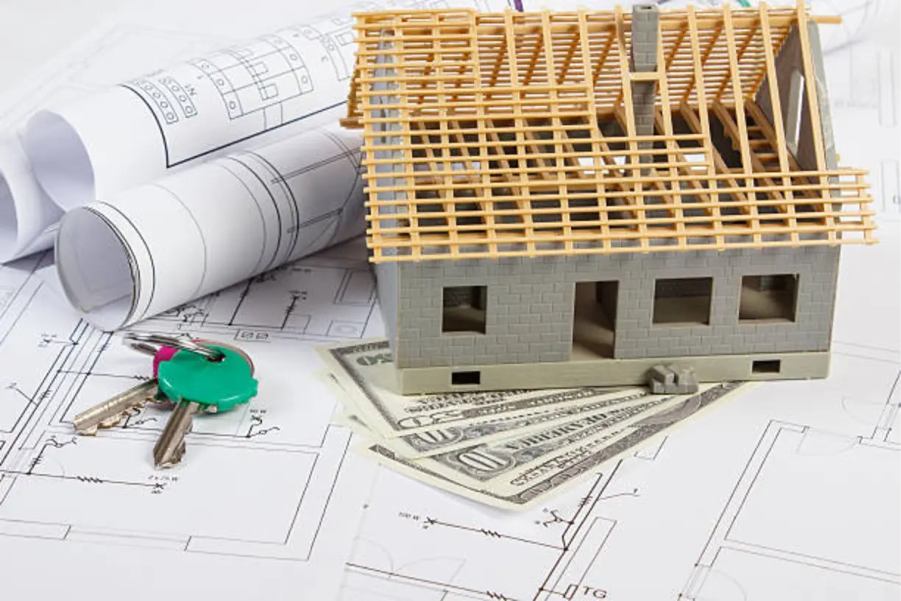
Residential construction costs are frequently misunderstood because the numbers people encounter, whether from online research, conversations with friends, or general industry averages, rarely reflect the full picture of what building a new home costs in a specific location at a specific time.
The base construction cost per square foot is the number most people focus on and the one that tells the least complete story. That number reflects the cost of building the structure itself under standard conditions with standard finishes. It does not reflect land acquisition if you do not already own a lot, site preparation costs that vary enormously based on topography, soil conditions, and access, utility connections and permits, architect and engineering fees, financing costs during the construction period, landscaping, and the upgraded finishes and features that most people want once they are building a custom home and realize they can specify exactly what they want.
The gap between the base construction cost and the total project cost is consistently larger than people expect. Working with a residential construction company that provides transparent all-in cost projections from the beginning of the planning process, rather than base cost estimates that grow through the project, is one of the most important factors in whether a new construction project finishes near the original budget or significantly over it.
What new construction does offer on the cost side is predictability in ongoing maintenance and operating costs. A newly built home built to current code with new systems, new materials, and new appliances carries minimal maintenance burden for the first several years. The long-term cost of ownership on a new build is typically lower than on a renovated older home where systems and components have varying ages and conditions.
Understanding the Real Costs of Renovation
Renovation costs are even harder to predict accurately than new construction costs, and the gap between the initial estimate and the final cost tends to be wider. The reason is straightforward: renovating an existing structure involves working with unknowns that only become visible once walls are opened, floors are lifted, and the condition of what is behind the surfaces is revealed.
Older homes in particular carry hidden costs that are difficult to anticipate even with a thorough pre-renovation inspection. Outdated electrical systems that do not meet current code. Plumbing that needs to be replaced rather than extended. Structural issues that were not visible before demolition began. Insulation that is inadequate by current standards. Hazardous materials including asbestos and lead paint in homes built before certain eras that require specialized removal. Each of these discoveries adds cost and time to a renovation project that was budgeted without them.
The contingency budget for renovation projects should be larger than most people expect. Experienced contractors working in residential home construction and renovation typically recommend budgeting a contingency of fifteen to twenty percent of the total project cost specifically for unknowns. Projects that do not include adequate contingency run into trouble when the inevitable discoveries happen and there is no financial room to address them without cutting scope elsewhere.
Renovation also carries a ceiling on what can be achieved in an existing structure. Fundamental limitations of floor plan, ceiling height, structural load paths, and lot placement cannot always be overcome regardless of budget. If the bones of the existing home do not support the vision for the finished product, renovation may produce a result that is improved but never quite right. New residential construction does not have that ceiling.
When Building New Makes More Sense
Several specific situations point clearly toward new residential construction over renovation.
When the existing structure has significant structural, mechanical, or environmental issues that make renovation costs approach or exceed the cost of building new, the case for renovation weakens considerably. At that point you are spending renovation-level money to fix an old house rather than build-level money to create a new one, and the result of all that spending is still an old house with updated components rather than a purpose-built home.
When the floor plan of the existing home fundamentally does not support the way you want to live and cannot be reconfigured within the structural constraints of the building, renovation produces a compromise. A residential construction company building a new home starts with your actual life requirements and designs around them. A renovation starts with an existing floor plan and works within it.
When you own a lot in a desirable location and the existing structure adds little value relative to the land, building new on that lot often produces a better financial outcome than investing heavily in renovating a structure that does not justify the investment. Teardown and rebuild scenarios are more common than many people realize in established neighborhoods where land values are high and aging structures have not kept pace.
When energy efficiency, accessibility, or specific technical requirements are a priority, new construction built to current standards and specifications from the ground up is easier to achieve than retrofitting an older structure. Modern insulation, HVAC systems, smart home infrastructure, and accessibility features are far simpler to incorporate into a design from the beginning than to add to an existing structure.
When Renovating Makes More Sense
Renovation has genuine advantages in situations where new construction either is not possible or does not make financial or practical sense.
When the existing home has structural bones, architectural character, or location attributes that genuinely cannot be replicated, renovation preserves something worth keeping. Historic homes, properties on irreplaceable lots, and structures with craftsmanship that modern construction does not reproduce at accessible price points all represent cases where the existing building has value that should be preserved and improved rather than replaced.
When the scope of work needed is genuinely limited, updating kitchens and bathrooms, adding square footage through an addition, improving energy efficiency, or reconfiguring a portion of the floor plan, renovation is the more economical path than building an entirely new home. Not every situation requires a full rebuild. A targeted renovation that addresses specific deficiencies while leaving what works intact is often the right answer.
When budget constraints make new construction genuinely unachievable for the size and location desired, renovation can produce a significantly improved home at a lower total cost than building new, even accounting for the hidden costs and contingency that renovation projects require. The key is being realistic about the scope of what is possible within the renovation budget before committing to a project.
When timeline pressure makes the longer process of new construction impractical, renovation of an existing home can in some cases be completed more quickly. Permitting for renovation projects is often faster than for new construction. And a renovation that does not involve foundation work, utility connections, and the full sequence of new construction can move from start to finish faster for a motivated owner with a clear scope.
The Role of Location and Land
The build versus renovate decision is inseparable from the question of where you want to be. In established neighborhoods with limited vacant land, building new is simply not possible without acquiring a property and demolishing what is there. In developing areas or on rural land, the constraints run the other direction and residential home construction may be the only viable path to a home that meets your needs.
Lot characteristics matter significantly for new construction cost and feasibility. Flat, well-drained lots with easy utility access are the most straightforward to build on. Sloped lots, sites with poor soil conditions, properties requiring significant clearing, or lots with limited access all add to the cost and complexity of new construction in ways that are not always reflected in general cost estimates. A residential construction company with local experience can assess a specific lot and provide a realistic picture of what building on it involves before the decision is made.
For renovation, the existing structure’s lot position affects what is possible in terms of additions, outdoor improvements, and access during construction. Tight urban lots leave little room for construction activity and may complicate renovation logistics in ways that extend timeline and add cost.
Working With a Residential Construction Company Through the Decision
Most people engage a contractor after they have already decided to build or renovate. Bringing a residential construction company into the conversation earlier, during the decision process itself rather than after it is concluded, produces a more informed decision and a better outcome regardless of which path is chosen.
An experienced residential construction company can assess an existing property and provide a realistic picture of what renovation would involve, what the likely cost range is including contingency, and what constraints the existing structure imposes on the vision. They can also provide preliminary new construction cost estimates for the same location and scope that allow a genuine apples-to-apples comparison rather than a comparison between an optimistic renovation budget and a rough construction estimate.
That early conversation also establishes the working relationship before the pressure of an active project is in place. Understanding how a contractor communicates, how they handle uncertainty and unexpected discoveries, and whether their approach to the project aligns with your expectations is information that is far more useful before you have signed a contract than after.
Why Build Once Construction Delivers on Residential Construction the Right Way
Making the build versus renovate decision clearly, then executing on it with the quality and transparency that protects your investment and produces the home you envisioned, takes more than a contractor who shows up when construction starts. Build Once Construction gives homeowners direct access to experienced residential construction professionals who understand both sides of this decision and work with clients from the earliest planning stages through project completion.
Whether you need a residential construction company to assess an existing property and give you an honest picture of what renovation would realistically cost and deliver, guidance on residential home construction options for a specific lot including the site-specific factors that affect cost and timeline, or a construction partner who brings the transparency and communication that keeps a major construction project on track from start to finish, Build Once Construction works with clients based on the real facts of their situation. You get honest assessments of what each path involves, clear cost projections that reflect the full project rather than optimistic base estimates, and a construction team that understands that the decision you make about how to create your home shapes every part of the experience and the outcome that follows.
For homeowners who want a residential construction company that engages with the build versus renovate decision as seriously as it engages with the construction itself, Build Once Construction is the straightforward starting point that most homeowners wish they had found before committing to a path without fully understanding what it involved.
Final Thought
The choice between residential construction and renovation is not a question with a universal right answer. It is a question with a right answer for your specific situation, your specific property, your specific budget, and your specific vision for what the finished home should be.
Make that decision based on a realistic understanding of what both paths cost, what they deliver, and where each one creates risks the other avoids. Bring in an experienced residential construction company early enough that their assessment informs the decision rather than simply executing it. And choose the path that genuinely fits your situation rather than the one that fits the assumptions most people bring to the question before they examine them carefully.
Ready to figure out whether building new or renovating is the right path for your situation? Visit buildonceconstruction.com